Volkswagen May 2026 Discounts: Tiguan R-Line Gets Up To Rs 2 Lakh, Virtus Gets Up To Rs 70,000


Volkswagen has put together a structured discount programme for May 2026, covering two models: the Virtus sedan and the Tiguan R-Line SUV. The benefits are a mix of exchange offers, loyalty benefits, scrappage incentives and service-related support.
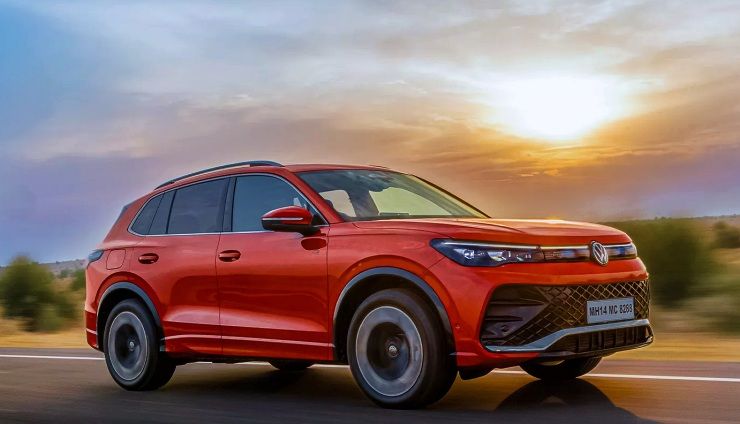
The Tiguan R-Line carries the larger package, with benefits of up to Rs 2 lakh. The Virtus gets benefits of up to Rs 70,000 across the Chrome and Sport lines.
These are not straight cash discounts in the usual sense. The final benefit depends on whether the buyer qualifies for exchange, loyalty or scrappage support. Volkswagen has also clarified that corporate and loyalty benefits cannot be clubbed together. Buyers in Kerala will need to account for an additional 1 percent cess.

The Tiguan R-Line is priced at Rs 47.11 lakh ex-showroom. At that price point, a Rs 2 lakh benefit is useful, but it does not change the car’s basic positioning. This remains a premium imported SUV aimed at buyers comparing it with models such as the Skoda Kodiaq, Jeep Meridian, Hyundai Tucson and other higher-end SUVs.
The Tiguan R-Line uses a 2.0-litre TSI petrol engine producing 204PS and 320Nm. It is paired with a 7-speed DSG automatic and 4MOTION all-wheel drive. Volkswagen also lists 21 Level 2 ADAS features, 9 airbags, front and rear disc brakes, a head-up display and a large 15-inch infotainment screen.
That equipment list explains why Volkswagen is not positioning the Tiguan R-Line as a volume SUV. It is more of a premium image-builder for the brand, and the May benefit gives interested buyers a little more room to negotiate.

The Virtus gets benefits of up to Rs 70,000 on both Chrome and Sport variants. The Chrome range starts at Rs 10.49 lakh, while the Sport range starts at Rs 14.09 lakh.
In percentage terms, the Rs 70,000 benefit matters more on the Virtus than the Rs 2 lakh benefit does on the Tiguan R-Line. For a buyer looking at a Rs 10 lakh to Rs 15 lakh sedan, this saving can influence the final EMI or the choice between variants.
The Virtus is one of the few remaining enthusiast-friendly sedans in the market. It offers 1.0-litre and 1.5-litre TSI turbo-petrol engine options, with manual and automatic gearbox choices depending on variant. It also carries a 5-star Global NCAP safety rating, which remains one of its strongest selling points against rivals.

The sedan segment has shrunk, but it has not disappeared. The Virtus competes with the Skoda Slavia, Hyundai Verna and Honda City. This is now a smaller but more focused buyer group, made up of customers who still prefer a lower driving position, better highway manners and a proper boot over the SUV body style.
Volkswagen sold 1,162 units of the Virtus in April 2026, making it the brand’s second-largest contributor after the Taigun that month. That shows the sedan still has steady demand, even if the market has shifted heavily toward SUVs.
The May offer helps keep the Virtus visible in a segment where buyers often cross-shop aggressively. A Rs 70,000 benefit may not sound dramatic, but it can close the gap between variants or help buyers choose the automatic over the manual.
Beyond the purchase-stage benefits, Volkswagen is offering free labour charges for scheduled services at 1,000 km, 7,500 km and 15,000 km on both models. Parts and consumables are not covered, but labour at authorised workshops is still a recurring ownership cost.
This is more relevant for Volkswagen buyers because the brand is often perceived as more expensive to maintain than some mass-market rivals. Free labour at early service intervals helps reduce that concern, at least during the first phase of ownership.
There is also a scrappage benefit of up to Rs 20,000 for buyers trading in an eligible old vehicle. This will apply only to buyers who meet the required documentation and vehicle eligibility conditions.

A new Virtus, with a facelift, will be launched in the 3rd quarter of 2026.
The offer structure also reflects how different these two models are for Volkswagen India. In April 2026, the Tiguan sold only 34 units, while the Virtus sold 1,162 units. The Tiguan is a niche premium SUV. The Virtus is a regular showroom product that still brings in meaningful volume.
That is why the Tiguan R-Line gets the larger headline benefit, while the Virtus gets the more practical buyer-facing offer. The Tiguan deal improves the appeal of a low-volume premium model. The Virtus offer helps Volkswagen stay competitive in a shrinking sedan space.
All offers are valid through May 31, 2026 and are subject to location, stock and eligibility. For buyers, the important part is to ask for the exact benefit break-up in writing before booking. The headline number is only useful if it applies to the model, variant and ownership profile being considered.