Volkswagen's 4 Upcoming Cars For India With Launch Timelines


The German automotive giant Volkswagen recently launched the Taigun facelift in India, after which it is now gearing up for the launch of not one but a total of four cars in India. Now, if you want to know the launch timelines of these upcoming models, then you have come to the right spot. Here are all the details of the upcoming Volkswagen cars.

The first car that will be launched by Volkswagen India will be the facelifted iteration of the Virtus mid-size sedan. Presently, it is one of the most successful premium sedans since its launch in the Indian market back in 2022. Now, after almost four years, Volkswagen is finally getting ready to launch its first major facelift. Recently, the facelifted model was spotted testing on Indian roads for the first time ahead of its expected launch in the third quarter of this year.
From the spy shots, it has been clearly noted that Volkswagen is not making any major changes to the Virtus’ already loved design. The overall silhouette and body panels will remain almost identical to the current model. The only noticeable changes will be on the front fascia, which will be getting subtle updates to make the sedan look fresh and more modern. The front bumper will be redesigned, and the air intake section will now come with a new mesh pattern instead of the current horizontal slats.
The sleek LED headlights will also remain the same. However, it will most likely get revised internals. As for the rear, Volkswagen could offer connected LED tail-lamps with a light bar in the middle. Additionally, like all facelifts, the Virtus will also be getting a new set of 16-inch alloy wheel designs.
Like the Taigun facelift, the Virtus facelift is expected to boast the same dashboard layout. The only major changes will be the addition of upgraded trim materials and new colour themes. As for the expected features, they will include a new 10.1-inch touchscreen infotainment system with updated graphics and AI integration, a larger 10.25-inch digital driver’s display, ambient lighting, and front parking sensors.
Volkswagen is also expected to improve the air-conditioning performance of this sedan with a new variable-geometry compressor. Mechanically, the Virtus facelift will continue with the same 1.0-litre and 1.5-litre TSI turbo-petrol engines.
The major update, however, will be the offering of a new 8-speed automatic transmission instead of the 6-speed torque converter automatic with the 1.0-litre TSI motor. Meanwhile, the 1.5-litre TSI engine will continue with the 7-speed DSG gearbox. Once launched, the Virtus facelift will continue to rival the Hyundai Verna, Honda City, and Skoda Slavia facelift.

Volkswagen recently launched the Tayron R-Line as its flagship SUV offering. However, the company is now planning to introduce a more practical and slightly less sporty version of the SUV in the Indian market. This new variant will be the Tayron non-R-Line, and it is expected to launch in the fourth quarter of calendar year 2026.
Currently, the Tayron R-Line is priced at Rs 46.99 lakh, ex-showroom. So, it is believed that the upcoming non-R-Line version is expected to be priced lower in the range of Rs 40 to Rs 45 lakh. In terms of design, the non-R-Line variant will get a more subtle appearance compared to the sporty R-Line model.
It is expected to feature a less aggressive grille and bumper design but retain the overall silhouette and styling. Volkswagen could also remove a few sporty styling elements to differentiate the two versions. The SUV will continue to use the same 2.0-litre TSI petrol engine, which comes paired with a 7-speed DSG gearbox.
However, reports suggest that this version could produce lower power and torque figures compared to the R-Line version, which currently makes 204 bhp. It is believed that Volkswagen could also remove a few premium features from the non-R-Line model to position it more competitively. Once launched, it will rival the Toyota Fortuner, MG Majestor, Skoda Kodiaq Lounge, and others.

The Volkswagen Golf GTI, as a surprise to a lot of people, became one of the most hyped-up enthusiast cars in India when it was launched last year. Volkswagen initially brought only 150 units of the Golf GTI to India as completely built-up units (CBUs). However, due to massive demand from enthusiasts, the entire allocation sold out quickly.
Now, Volkswagen is planning to launch a fresh batch of the Golf GTI in India in the first quarter of calendar year 2027. This true hot hatch comes powered by a 2.0-litre four-cylinder turbo-petrol TSI engine producing 265 bhp and 370 Nm of torque.
Transmission duties are handled by a 7-speed dual-clutch automatic gearbox driving the front wheels. The hatchback also gets a front axle differential lock for improved cornering performance. It can complete a sprint from 0 to 100 kmph in just 5.9 seconds and reach a top speed of 250 kmph (electronically limited).
As for the design highlights, the Golf GTI features matrix LED headlights, a connected LED light bar, an illuminated Volkswagen logo, GTI badges, 18-inch alloy wheels, red brake calipers, smoked LED tail-lamps, a roof spoiler, and dual exhaust tips. On the inside, it comes offered with a 12.9-inch infotainment system, a 10.25-inch digital instrument cluster, signature tartan seat upholstery, heated and ventilated front seats, three-zone climate control, and 30-colour ambient lighting.
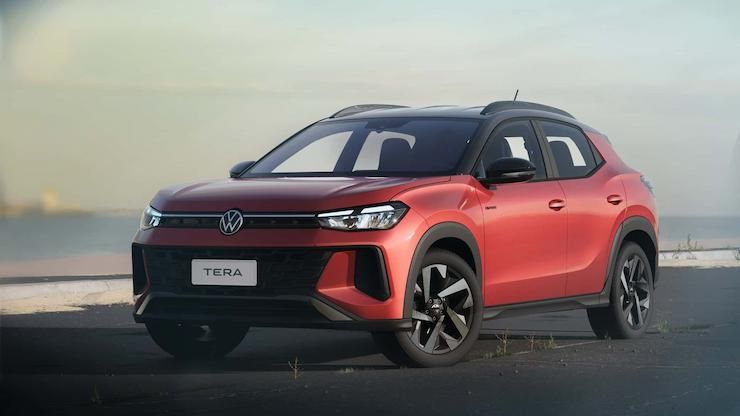
After seeing the success of the Skoda Kylaq, Volkswagen has made a U-turn with its strategy of not launching more affordable models in India. It has now been reported that the company is gearing up for the launch of an all-new sub-4-metre SUV. This model is expected to launch in the second quarter of calendar year 2027. It will directly rival the Skoda Kylaq along with other compact SUVs in the segment.
The upcoming SUV will be based on the same MQB-A0-IN platform used by the Taigun, Virtus, Kushaq, Slavia, and Kylaq. However, despite sharing the platform with the Skoda Kylaq, the Volkswagen version will get completely different styling.
The SUV is expected to take its design inspiration from larger Volkswagen SUVs. It could feature sleek LED headlamps, a wide lower air intake, faux skid plates, and bumper-integrated fog lamps. The rear section is also expected to get sleek LED tail-lamps connected by a light bar. As for the cabin, it will most likely offer a different dashboard layout compared to the Kylaq.
The feature list is expected to remain almost the same as the Kylaq. Also, mechanically, the SUV will use the same 1.0-litre three-cylinder TSI turbo-petrol engine producing 115 PS and 178 Nm of torque. Transmission options will include a 6-speed manual gearbox and the newly introduced 8-speed automatic transmission. Pricing will be around Rs 7.5 to Rs 13 lakh.