Indian Start-Up Rapido Beats American Ride Hailing Giant Uber


The ride hailing landscape has experienced a massive shift, with homegrown platform Rapido overtaking international giant Uber in total ride volume. To counter this aggressive expansion and protect its market position, Uber has just infused a massive Rs 3,000 crore into its local subsidiary. This capital injection highlights the intense pressure traditional cab aggregators are facing from a newer, more agile competitor that started exclusively with two wheelers.

Uber raised these funds by allotting 14.4 million equity shares at an issue price of Rs 2,022.85 each to its parent entity. The money arrived in two distinct tranches, starting with Rs 200 crore late last year, followed by a much larger Rs 2,721 crore injection in January.
This financial backing comes at a critical time for the global aggregator. According to recent filings, the company reported a staggering 89 percent decline in net revenue from its ride hailing business, dropping to just Rs 88 crore in the 2025 financial year from Rs 807 crore the previous year.
Interestingly, the total gross revenue generated from ride commissions remained relatively flat at Rs 2,604 crore, indicating that the company is actively burning through cash to maintain its fleet and user base in a highly contested space.
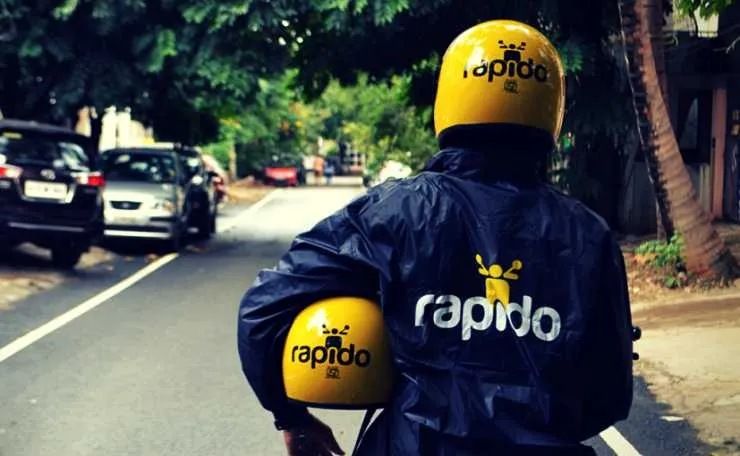
Rapido now commands roughly 50 percent of the overall ride hailing market in terms of total rides completed, pushing Uber into second place with a 40 percent share. The start-up has built an absolute fortress in the two-wheeler and three-wheeler segments, securing over a 65 percent market share in these high-volume categories by catering strictly to daily commuters looking for affordable last mile connectivity.
The most surprising disruption happened in the traditional four-wheeler cab segment. Rapido only entered the conventional cab market in late 2023, but it has already captured more than a 20 percent share. The company now executes half a million four-wheeler rides every single day across major metropolitan areas.
This rapid growth came primarily at the expense of older rival Ola, which saw its cab market share shrink to between 25 and 30 percent as the brand shifted heavy focus toward its electric vehicle manufacturing business. While Uber still maintains a solid lead in the four-wheeler specific category with a 45 percent share, the overall volume gap is closing rapidly.
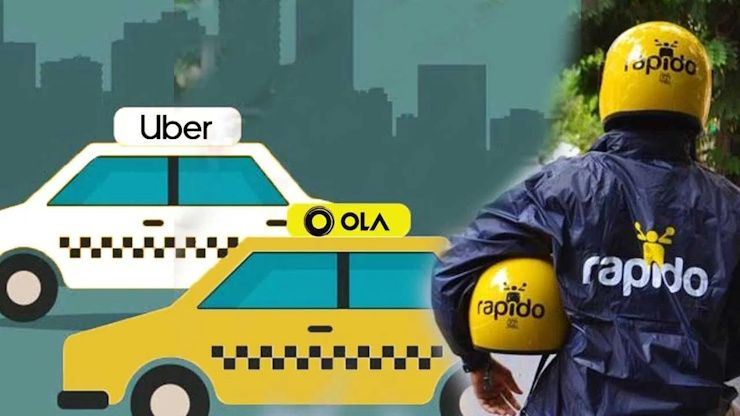
The core reason behind this explosive growth is a fundamental difference in how drivers are treated and charged on the platform. Instead of taking a hefty percentage cut from every single trip, Rapido introduced a unique subscription-based model for its cab operators.
Drivers pay a fixed daily or weekly fee to use the software platform and then keep the entirety of their passenger ride earnings. This zero-commission approach has attracted a massive number of drivers away from competing platforms, which directly translates to significantly reduced wait times and fewer ride cancellations for the end user.
This driver friendly model has translated directly into severe app dominance. Digital tracking data reveals that Rapido currently boasts around 50 million monthly active users on the Android platform. In stark contrast, Uber trails significantly behind with just 30 million active users.
Furthermore, Rapido recently crossed the Rs 1,000 crore income milestone for the 2025 financial year, proving the long-term financial viability of its approach. The startup also recently secured an additional Rs 125 crore in private funding from major venture capital firms to aggressively fuel its expansion into smaller tier two and tier three towns.
The situation has escalated to a point where global executives are openly acknowledging the threat. The chief executive of Uber recently admitted that their traditional rivalry with Ola is over, specifically pointing to Rapido as their absolute toughest competition right now.
With Rs 3,000 crore now sitting in Uber's war chest, consumers and car enthusiasts can expect heavy discounting, improved vehicle quality standards, and aggressive driver incentives over the coming months as the global heavyweight tries desperately to reclaim the top mobility spot.