India-Made Toyota Urban Cruiser EV (eBella) Breaks Into Norway's Top 5 Selling Cars


A Toyota electric car built in Gujarat has made a strong start in one of the toughest electric-car markets in the world. In Norway, the Toyota Urban Cruiser, which is the export-market version of the India-made Toyota Urban Cruiser eBella and a sister model to the Maruti Suzuki eVitara, finished fifth in the country’s Q1 2026 passenger-car rankings.

That matters because Norway is not an easy market to impress. EVs made up 95.9 percent of all new-car sales there in 2025, and in March 2026 the electric share was already up to 98.4 percent.
This is a market where buyers have a wide choice of EVs from Tesla, Volkswagen, Volvo, BYD, Skoda and several others. A new entrant does not break into the top five there by accident.
The Toyota Urban Cruiser’s rise has been fast. One industry ranking says it jumped 100 places year on year to reach fifth in Norway’s Q1 2026 standings. That is a sharp climb in a market where Tesla’s Model Y and Model 3 still dominate, and where Toyota’s own bZ4X is already a known player.
The Toyota version sold in Europe is not called eBella. There, it is sold as the Urban Cruiser. Underneath, though, it is closely related to the vehicle being built in Gujarat for both Toyota and Suzuki.
The shared platform is one reason this result matters. It shows that a product coming out of India is being accepted in a mature EV market, not just in price-sensitive or emerging export destinations.

Toyota’s European Urban Cruiser comes with two battery choices. The front-wheel-drive 49kWh version makes 144hp and is rated at up to 344km on the WLTP cycle. The larger 61kWh battery is offered in front-wheel-drive and all-wheel-drive forms. The 61kWh FWD version makes 174hp and is rated at up to 426km, while the AWD version goes to 184hp and 395km.
Those are not class-leading numbers on their own, but they are solid enough for the segment. More importantly, the Urban Cruiser fits Norway’s current market direction.
The country has been seeing strong demand for practical compact EVs that sit below the largest family SUVs and premium models on price. Toyota has also been expanding its BEV lineup in Europe, and the Urban Cruiser is clearly helping that push.
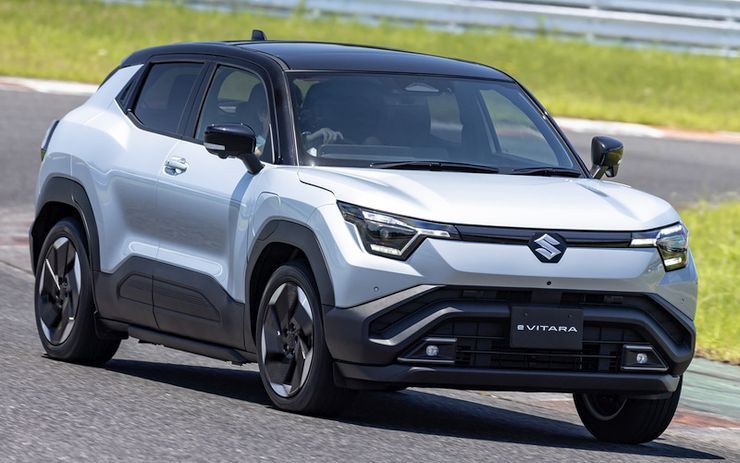
The manufacturing story is what makes this more than just a Norway sales update. The Gujarat plant is now central to Maruti Suzuki’s global EV plans. The company has already said the eVitara will be exported to more than 100 countries, and official export disclosures showed over 30,000 units had already been shipped to more than 44 countries by spring this year.
That means the same plant is now feeding demand in India, export markets for Suzuki, and overseas demand for Toyota’s version of the same vehicle. Norway’s response is useful because it suggests the product is not being accepted only on price. It is finding buyers in a market that already knows EVs well and expects a lot from them.
That does not automatically guarantee the same result everywhere else. Norway is unusual because of its tax structure, charging network and EV-heavy market. But it does give the India-made Toyota-Suzuki EV programme some strong early validation. The Toyota eBella Urban Cruiser is due for an Indian launch later this month. Toyota unveiled the car in India a couple of months ago but didn't announce pricing, which is expected to happen this month.
In India, the Toyota eBella Urban Cruiser EV is expected to be similar to the Maruti Suzuki eVitara in terms of confuguration. In other words, it is expected to get two battery packs but only a front wheel drive layout. The all wheel drive layout, for now, seems reserved only for export markets. It makes sense because India is a very cost conscious market with very little demand for all wheel drive cars. On the other hand, colder countries such as Norway and Finland, that have snow for a good part of the year, prefer all wheel drive cars.