All Truck Parking On Highways Banned By Supreme Court


To put an end to the increasing number of fatalities on highways, the Supreme Court of India has taken a massive step. It has now ordered a complete ban on the parking of heavy and commercial vehicles on national highways. This ruling has been made due to the continuous highway fatalities despite multiple policy interventions and infrastructure upgrades. The court has also clearly warned that expressways and highways must not turn into “corridors of peril.”
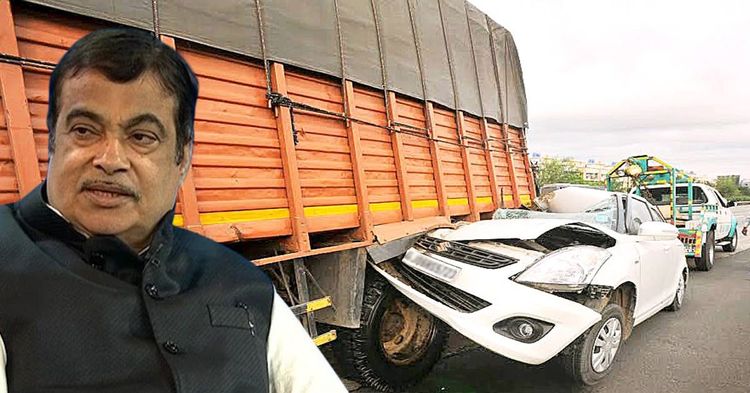
During the recent verdict, the apex court has also stated that no heavy or commercial vehicle will be allowed to stop or park on any national highway carriageway or even on paved shoulders. This is one of the strictest directives issued in recent times when it comes to highway safety.
The only exception to this rule is that vehicles will be allowed to halt at designated parking bays or lay-bys. This means that truck drivers and commercial operators will now have to rely entirely on officially designated stopping zones. As a result, it will eliminate the practice of roadside parking, which has caused a lot of fatalities over the years.

The Supreme Court of India has also emphasized that illegal parking is one of the major contributors to highway accidents. It becomes especially more dangerous during night-time when visibility is low and moving vehicles crash into stationary trucks.
To ensure that this rule is not just limited to paper, the court has mandated the use of advanced enforcement systems. These will include Advanced Traffic Management Systems (ATMS), GPS-based photographic evidence, and eChallan systems. With the help of these systems, authorities will detect violations in real time and penalize offenders without manual intervention.

Additionally to make sure that the enforcement is done strictly, its responsibility has been given to multiple authorities. These include the Ministry of Road Transport and Highways, the National Highways Authority of India, state police, and transport departments.
What makes this new verdict even more important is that the Supreme Court has set a strict timeline of 60 days for full compliance. Within this period, all authorities must enforce the parking ban, and systems for monitoring and penalties must become operational. Additionally, ground-level enforcement must be visible.
Apart from these, the district magistrates have also been given a crucial role. They will be responsible for overseeing and setting up standard operating procedures (SOPs) and also monitoring patrolling and compliance on highways.

The court highlighted a critical statistic to justify its decision. It stated that national highways in India account for only around 2 percent of the total road network. However, they contribute to nearly 30 percent of all road fatalities. The court added that this disproportionate number clearly indicates that highways are among the most dangerous road segments in the country.
In addition to the ban on parking of trucks on highways, the Supreme Court has also ordered an immediate ban on the construction or operation of new dhabas or any commercial establishments within the highway right of way. For existing structures, the directive is even stricter.
All unauthorized establishments must be demolished within 60 days. With this move, the aim is to remove distractions, unregulated access points, and unsafe roadside activity that often leads to accidents. Also, the court has tightened the rules around approvals for establishments near highways.

It has directed that no licence or approval will be granted without clearance from the National Highways Authority of India or PWD. Additionally, all existing licences must be reviewed within 30 days. The court added that the infrastructure gaps also play a role in accidents. The court has issued directives to improve surveillance systems, better lighting at accident-prone blackspots, and development of truck lay-bys.

For the proper implementation at the ground level, the court has also ordered the creation of district-level highway safety task forces within 15 days. These task forces will include district administration officials, police, NHAI representatives, and local bodies. Their role will be to identify problem areas, monitor compliance, and take corrective action quickly.