Maruti Suzuki's Record May Sales Were Built in Small Towns, Not Big Cities


Maruti Suzuki posted its highest-ever monthly sales in May 2026, dispatching 2,42,688 units in total and growing 34.8 per cent year-on-year. The number is a record, but the more interesting data point behind it is where those sales came from. The share of Maruti cars sold in rural areas climbed to 52 per cent in May, up from 32 per cent a year ago. That 20 percentage point shift in the rural contribution is a structural change, not a seasonal blip.
Maruti chairman R C Bhargava credited government policies around rural development and agricultural income growth as the primary drivers. The company's domestic passenger vehicle dispatches stood at 1,90,337 units in May, up nearly 40 per cent from 1,35,962 units in May 2025. Overall domestic sales including light commercial vehicles were 1,93,535 units.
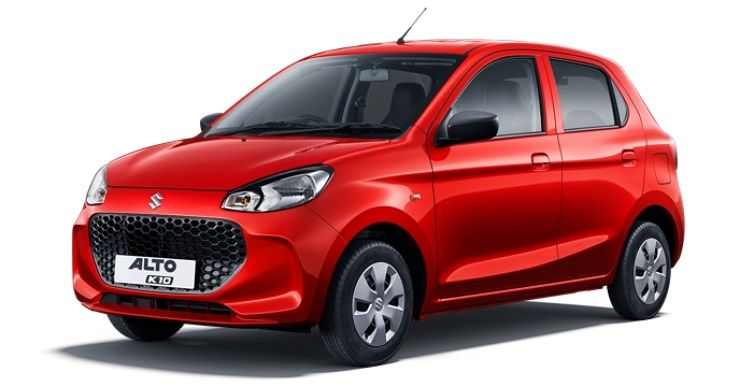
The numbers break down clearly. Utility vehicles, covering the Brezza, Fronx, Grand Vitara, Ertiga, Invicto, XL6 and Jimny, grew 44.4 per cent to 79,267 units from 54,899 units in May 2025. Compact and midsize passenger cars, which include the Baleno, Swift, Dzire, WagonR, Celerio, Ignis and Ciaz, grew 31.6 per cent to 81,555 units from 61,960 units. Mini cars, the Alto and S-Presso, were the fastest-growing category within the portfolio, surging 140 per cent to 16,275 units from just 6,776 units in May 2025.

That mini car jump is directly linked to the GST reduction on small cars announced in September 2025. The revised tax structure cut the effective on-road price of an entry Alto by approximately Rs 25,000 to Rs 35,000 depending on the state and variant. For a buyer financing a Rs 4.5 to 5 lakh car, that reduction directly affects the EMI, in many cases bringing monthly repayments below the Rs 7,000 threshold that is the practical ceiling for first-time car owners in smaller towns.
Maruti's overall domestic passenger vehicle market share climbed to approximately 43 per cent in May 2026, up from 38.88 per cent in May 2025, a gain of more than four percentage points in twelve months. In a market that was itself growing at 23 per cent, adding four points of share means Maruti grew nearly 60 per cent faster than the market average. The brand that came closest to this pace was Tata Motors at 39.25 per cent growth, but its absolute volume base of 59,090 units is less than a third of Maruti's.
The rural share of 52 per cent is also a competitive moat that other brands are not close to matching. Maruti's service network covers over 4,000 towns and villages. A buyer in a tier 3 or tier 4 town picking a car factors in where the nearest service centre is, how long a service takes and what the parts availability looks like. Maruti scores on all three parameters in a way that no rival currently replicates at scale.

Exports added a further dimension in May. Bhargava noted that Maruti's annual vehicle exports grew from around 1 lakh units in FY14 to approximately 4.5 lakh units in FY26, a 4.5-fold increase over twelve years.
In the current fiscal year, Maruti is targeting export volumes that would push it past the 5 lakh annual unit mark for the first time. Key export markets include South Africa, Latin America and the Middle East, where the Swift, Dzire and Baleno find consistent demand.
The May record is not just a good month. It is a data point that shows the structural drivers, rural income, small car affordability and a wide service network, converging at the same time. When those three things align for a brand with Maruti's distribution depth, the sales number is the logical outcome.