Coming Soon: Driving License Validity For 32 Years


The road transport ministry is evaluating a major policy shift that would extend the validity of a driving license until the holder turns 50 years old. Currently, a standard driving license for non-transport vehicles [cars] in India is valid for 20 years from the date of issue or until the driver reaches the age of 40, whichever comes first. This proposed extension is part of a broader government effort to reduce the compliance burden on citizens and digitize transport related services.

If implemented, a person obtaining their license at age 18 would not need to worry about the renewal process for 32 years. According to officials, a high-level committee recommended this move to improve the ease of living for vehicle owners.
The proposal acknowledges that requiring frequent renewals for younger, generally healthy drivers creates unnecessary administrative work for both the public and the Regional Transport Offices.
A key component of this proposal is the complete digitization of the renewal process. The ministry is aiming to make the transfer of vehicle ownership and the renewal of permits entirely online.
Officials have stated that state government revenues will not suffer, as the required fees for license renewals can be collected digitally without the applicant ever needing to visit a physical RTO.

The government is also looking at ways to simplify the process for older drivers. Currently, drivers over the age of 40 must undergo renewals every 10 years, and those over 50 face five-year renewal cycles, which usually mandate a medical fitness certificate. The ministry is considering making the submission of these medical certificates easier for drivers over 50, potentially integrating it into the online system to avoid physical visits.

To balance this extended 32-year validity period with road safety concerns, the ministry plans to implement a strict point-based penalty system linked to the Motor Vehicles Act. Instead of relying on a time-based renewal to check a driver's fitness, the government will actively monitor on-road behaviour. Under this proposed 'demerit and merit' point licensing system, bad driving behaviour and traffic violations - such as jumping signals or speeding - will result in negative points on the driver's digital record. These points will be added alongside standard financial fines.
Accumulating a certain number of negative points will trigger severe consequences. An expert committee had previously recommended that accumulating 12 points within a three-year period should result in an automatic one-year suspension of the driving license, regardless of its extended validity date.
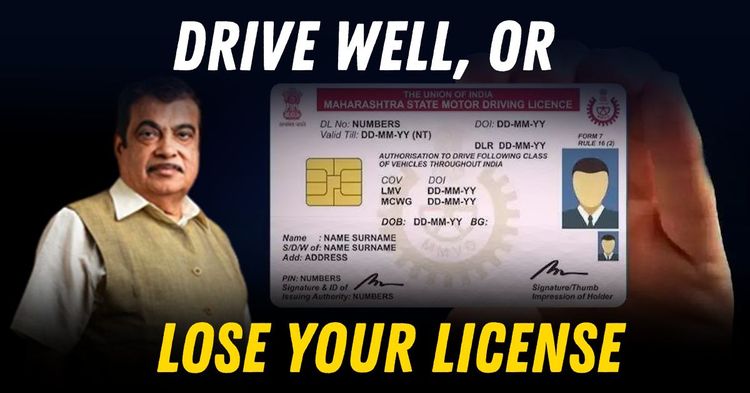
If a suspended driver accumulates another 12 points after reinstatement, the license could be cancelled entirely for five years. Under this system, suspended drivers will not simply be able to wait out the penalty; they will be mandated to complete refresher training courses or pass a fresh driving test before their driving privileges are returned.