Tata Motors Seeing 2-2.5X Surge In Electric Car Demand


Petrol is now at Rs 102.12 per litre in Delhi. Diesel is at Rs 95.20. These are not small numbers for a household already dealing with higher monthly bills. The market is responding quickly, and in a way that years of EV incentives could not fully achieve on their own.

Tata Motors has reported a 2 to 2.5 times jump in EV bookings over the past two months. The sharpest change has come in the last fortnight, after fuel prices were increased multiple times following the West Asia conflict.
The company says the demand surge is especially strong in the sub-Rs 15 lakh segment, where buyers are most sensitive to monthly running costs. This is not only a premium EV story. It is a small-car and city-commuter story.
Fuel prices have risen by nearly Rs 7.5 per litre in less than two weeks, an increase of almost 8 percent. For a buyer using a petrol hatchback for 1,200 to 1,500 km a month, the impact is visible immediately.
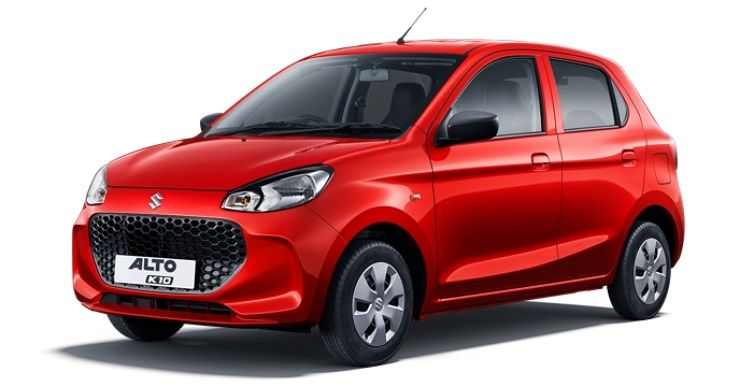
At Rs 102.12 per litre, a petrol car returning 15 kmpl costs about Rs 6.8 per km to run on fuel alone. At 16 kmpl, it still costs about Rs 6.4 per km. A small EV charged mostly at home can be much cheaper per kilometre, even after accounting for city driving conditions and charging losses.
This difference has always existed, but the latest fuel hike has made it harder to ignore. A buyer who was earlier calculating only the upfront price is now looking more closely at the monthly ownership cost. That is where EVs in the lower price bands start to become more persuasive.
The updated Tiago EV, for instance, now starts at Rs 6.99 lakh, while the refreshed petrol Tiago starts at Rs 4.69 lakh and the CNG version at Rs 5.79 lakh. The EV is still more expensive than the petrol car, but the running-cost gap has become the main argument.

The booking data puts the shift in sharper perspective. In May 2026, EVs made up close to 33 percent of Tata Motors’ total bookings. For a market where passenger EVs accounted for only about 4.2 percent of total passenger vehicle sales in FY26, that is a major change.
Tata Motors is also preparing to raise EV production capacity. The company currently averages around 10,000 EV units a month and is targeting about 15,000 units a month over the next three to four months. That is a 50 percent planned increase, and it suggests the company sees the current demand surge as more than a short spike.
The updated Punch EV, launched earlier in 2026, has also helped bring more buyers into the portfolio. Tata’s EV range now covers small hatchbacks, compact SUVs and larger electric SUVs, which gives the company a wider funnel than it had during the early Nexon EV-led phase.

Subsidies help reduce acquisition cost, but fuel prices change daily behaviour. Every refill becomes a reminder of how much the car costs to run. That is why a fuel-price shock can push buyers faster than a policy incentive.
This is especially true in the small-car segment. A Rs 600 to Rs 800 increase in monthly fuel expense may not change behaviour in the luxury segment. But for a buyer financing a sub-Rs 15 lakh car, it can affect the household budget. The higher the monthly running, the stronger the EV case becomes.
CNG has traditionally served this role in cities like Delhi, Mumbai and parts of Gujarat. But CNG prices have also risen, and CNG availability is not equally strong everywhere. EVs now sit in the same conversation as petrol, CNG and hybrids, especially for buyers with predictable daily usage and access to home charging.

The next challenge may not be buyer interest. It may be supply. Tata Motors has already indicated that EV demand could push industry penetration to 8 to 10 percent if supply is available. That is a big statement because it suggests the market can absorb more EVs than manufacturers are currently able to deliver.
This also changes the nature of the EV debate. Earlier, the question was whether buyers were ready. Now the question is whether manufacturers, suppliers, batteries, chargers and dealerships can keep pace.
The current fuel-price spike may soften later, but it has already made one thing clear. EVs are no longer being evaluated only as environment-friendly alternatives. They are being evaluated as monthly-cost protection.
For many buyers, that is a stronger reason than a subsidy. A lower fuel bill every month is easier to understand than a policy incentive built into the purchase price. That is why the latest fuel shock may have done more for affordable EV consideration than years of careful EV promotion.