It's Official, CNG Overtakes Diesel Yet Again: EVs And Hybrids Grow


In FY2026, for the first time, CNG outsold diesel in the passenger vehicle market. Total passenger vehicle sales stood at 46.83 lakh units, and CNG accounted for 21.7 percent of that, or 10.14 lakh units. Diesel came in at 18.4 percent, or 8.63 lakh units. That gap is not marginal. CNG sold 1.51 lakh units more than diesel, making it the second most popular fuel choice after petrol, which held 52.6 percent share at 24.61 lakh units.

This is a structural shift, not a one-year blip. CNG's share has climbed from roughly 12 to 13 percent three years ago to nearly 22 percent in FY26. In FY25, CNG was already ahead of diesel at 19.4 percent versus diesel's 18 percent.
So FY26 did not create the trend. It widened it. Diesel's retreat has been steady since manufacturers began dropping diesel engines from hatchbacks and compact sedans because BS6 upgrades made them too expensive to justify at the lower end of the market.

The CNG market is not evenly spread. Maruti Suzuki alone sold 7.08 lakh CNG units in FY26, which is approximately 70 percent of the entire CNG car market. The balance is shared between Tata Motors at 1.72 lakh units and Hyundai at around 95,000 units. No other manufacturer is in the same league on CNG volumes.
What Maruti has done is simple in principle but hard to execute: it offers CNG as a factory-fitted option across nearly every major model in its lineup. The Alto K10, Celerio, WagonR, Swift, Baleno, Dzire, Ertiga, XL6 and now the Brezza all have CNG variants.
Buyers do not have to go to an aftermarket installer or worry about warranty issues. That factory fitment credibility, combined with Maruti's service network, has made CNG the default rational choice for high-mileage buyers.
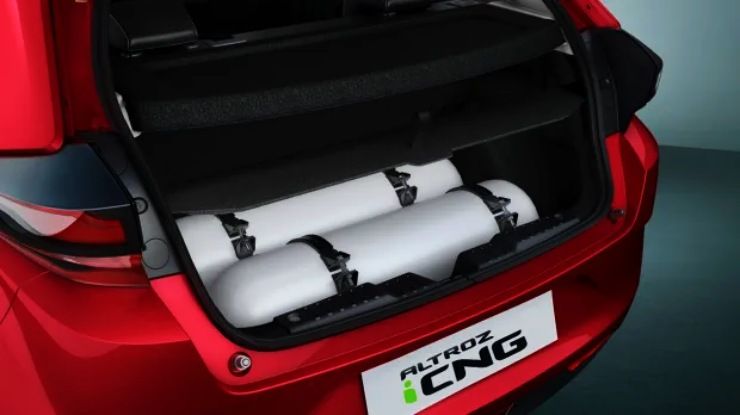
The scale of that shift is visible inside Maruti's own portfolio. In FY25, around 34 percent of Maruti's total sales came from CNG models. That is not a niche share. It means roughly one out of every three Maruti cars sold now runs on CNG. Tata is following with Tiago, Tigor, Punch, Altroz and Nexon CNG variants, but it is still far behind in absolute volume.
At the other end of the powertrain spectrum, electric vehicles contributed 2.17 lakh units, or 4.6 percent of total sales. Tata Motors led with 88,405 EV units, accounting for 14 percent of its own total portfolio. MG Motor was even more concentrated: 62,591 EV units, representing 85.8 percent of MG's entire sales. Mahindra contributed 52,226 EV units. Hyundai and Kia combined for barely 1 percent of their own sales in EV form.
Hybrids added 1.25 lakh units at 2.7 percent of the market. Toyota Kirloskar dominated here, selling 1.02 lakh hybrid units, which is 27.8 percent of its own total sales. Maruti contributed around 20,000 hybrid units through its Grand Vitara and Invicto models.
Add those three segments together and the market shift becomes clearer. CNG, EV and hybrid vehicles together crossed 13.4 lakh units in FY26, or close to 30 percent of all passenger vehicle sales. Put simply, nearly one in three cars sold now uses something other than a plain petrol or diesel setup.

Diesel still matters in specific pockets. Mahindra and Mahindra ran 74.6 percent of its total sales on diesel in FY26, reflecting its SUV-heavy portfolio where diesel engines deliver the kind of torque buyers in that segment want. Jeep was at 87 percent diesel. These brands have either not yet scaled their EV offering or sell vehicles where diesel still makes the most functional sense.
The picture that FY26 paints is a market that is genuinely multi-fuel. Petrol remains the default for buyers who do not drive enough to justify CNG's infrastructure constraints. CNG is now the mainstream low-running-cost answer. Diesel has narrowed into SUVs and utility-focused vehicles. EVs and hybrids are growing, but for now they remain strongest either at the premium end or in line-ups where the manufacturer has made a clear powertrain bet