Real Reason BYD Won't Be Allowed To Build Cars In India: Chinese Military Links Or Something Else?


BYD is the world's largest electric vehicle maker. It outsells every other EV brand globally, including Tesla. Its cars are competitively priced, technologically capable, and clearly in demand here. The Atto 3, Seal, eMAX 7 and Sealion 7 are all on sale, priced between Rs 24.99 lakh and Rs 54.90 lakh, and the brand reportedly grew sales 88 percent last year to around 5,500 units. And yet BYD cannot build a factory here, cannot bring in senior executives on work visas, and cannot scale beyond a government-imposed import ceiling of 2,500 units per model per year. The official reason is national security. The real picture is more complicated.
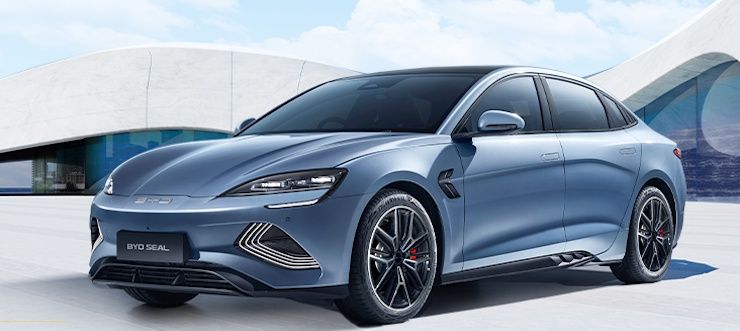
The government has blocked BYD's manufacturing investment twice. In July 2023, a $1 billion factory proposal with Hyderabad-based Megha Engineering was rejected on security grounds. In April 2025, Commerce Minister Piyush Goyal confirmed the door was still shut.
Great Wall Motor had already given up trying to establish a plant after similar regulatory resistance. The Galwan Valley clash in June 2020, which killed 20 Indian soldiers, is the stated trigger for this posture. It led to app bans, telecom restrictions and tightened FDI rules requiring prior government approval for investments from countries sharing a land border with India.
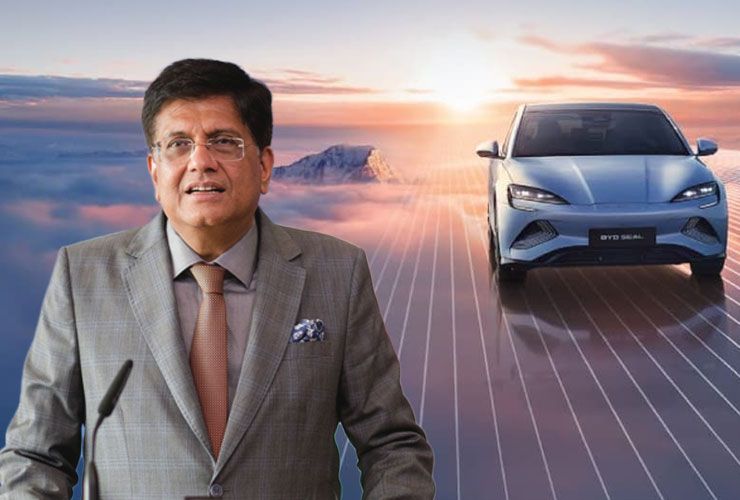
Those measures were understandable in their original context. But applying a blanket manufacturing ban to a car company in 2026, six years after the border clash and in the middle of an EV transition, deserves more scrutiny than it typically gets.
The security argument made sense for apps harvesting data or telecom equipment embedded in critical infrastructure. It is harder to apply cleanly to an electric scooter or a family SUV.
A BYD factory in Pune does not give Beijing access to sensitive systems the way a Huawei node in a telecom network might. If the concern is about financial dependence on Chinese supply chains, that is a legitimate industrial policy argument. But it is a different argument from national security, and it deserves to be made honestly rather than dressed up in the same language.

The more credible explanation is industrial protection. Local EV players like Tata Motors and Mahindra have invested heavily in building electric vehicle platforms, battery packs and supply chains.
BYD, which manufactures its own batteries through its Blade Battery technology and controls costs at a level no domestic brand currently can, would be a formidable competitor if allowed to produce locally.
A BYD assembled in India, even as a semi-knocked-down unit, could undercut Tata Nexon EV and Mahindra BE 6 on price while offering competitive range. That is not a national security threat. That is a market disruption that domestic manufacturers would lobby hard against.
If the goal is to allow competition while protecting strategic interests, a blanket ban is a blunt instrument. The government has sharper options. It could approve BYD's manufacturing investment with binding conditions: minimum local content thresholds within a fixed timeline, mandatory local battery cell production, restrictions on data handling and connectivity features, and a cap on component sourcing from Chinese parent entities.
These are not novel ideas. South Korea, Germany and the United States have all debated conditioned access frameworks for Chinese EV investment rather than outright exclusion.

A local battery cell manufacturing requirement, in particular, would directly serve the government's stated goal of building a domestic battery supply chain. BYD's Blade Battery is one of the most cost-efficient lithium iron phosphate chemistries in the world.
Forcing that technology to be produced here, with local employment and supply chain development attached to the approval, would be a more productive outcome than simply keeping BYD at arm's length while domestic players build at a slower pace.
The current policy means BYD cars arrive as fully built imports at 100 percent duty, which is among the highest import tariffs on passenger vehicles anywhere in the world. The United States charges 2.5 percent on standard car imports, Germany 10 percent.
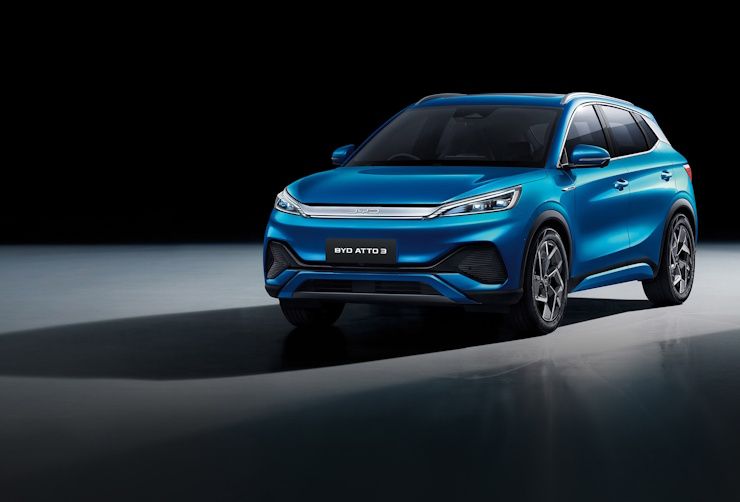
That tariff wall is what makes the Atto 3 start at Rs 24.99 lakh instead of something closer to Rs 15 lakh, which is roughly where a locally assembled equivalent could plausibly land. The buyer is effectively subsidising industrial protection through inflated prices on a product they are already choosing to buy despite those prices.
Meanwhile Tesla, a US company, was welcomed with a custom-designed import duty concession framework and multiple high-level political meetings. It then quietly dropped its factory plans anyway.
BYD, which actually had a serious local manufacturing proposal on the table with a committed Indian partner, was turned away. The contrast is difficult to explain through a security lens alone.
The government may have valid reasons to be cautious about deep Chinese commercial entanglement. But a policy that protects domestic industry by keeping the world's most cost-competitive EV maker artificially expensive is ultimately a policy that slows EV adoption and makes buyers pay more. That cost is real, even if it rarely gets counted alongside the geopolitical arguments.