10 New 7 Seat SUVs Launching Soon: MG Majestor to Mahindra Scorpio-N Facelift


After mid-size SUVs, another segment that has been seeing a lot of action lately is the seven-seater SUV space. It is gradually gaining popularity among buyers because of its practicality and versatility. While there are already several SUVs available in this segment, many more are lined up for launch in the Indian market. Here is a list of 10 upcoming seven-seater SUVs that are expected to launch soon.

MG Motor unveiled the Majestor, which will replace the MG Gloster, earlier this year, and we also got to drive the SUV recently. While MG has already fully revealed the SUV, the prices are yet to be announced.
The Majestor comes loaded with premium features like automatic climate control, ventilated seats, front-seat massage function, Level 2 ADAS, leather upholstery, panoramic sunroof, and more. The SUV is powered by a 2.0-litre twin-turbo diesel engine that produces around 215 bhp and 480 Nm of torque. It is a proper 4x4 SUV and also gets a low-range transfer case, 10 driving modes, and an 810 mm water-wading capacity.

Mahindra’s Scorpio N is an extremely popular SUV thanks to its rugged looks, comfortable interior, and modern features. Mahindra is currently working on a facelift for the SUV, and test mules have already been spotted several times.
As part of the update, the SUV is expected to receive new alloy wheels, redesigned bumpers and grille, and possibly updated headlamps. On the inside, the SUV could get a larger Roxx-like touchscreen infotainment system, while Level 2 ADAS may also be offered in more variants.
The SUV is expected to continue with the same 2.2-litre diesel and 2.0-litre turbo-petrol engine options with both manual and automatic gearbox choices.

The Scorpio Classic, which is essentially the original Scorpio, is also due for a facelift. It is expected to receive subtle exterior updates such as a revised grille, refreshed bumpers, and updated lighting elements.
Interior improvements could include a better touchscreen infotainment system, improved upholstery, and additional charging options. Mahindra is unlikely to make drastic design changes, as the SUV’s rugged appearance continues to remain popular among buyers.
Mechanically, the SUV is expected to continue with the same 2.2-litre turbo-diesel engine paired with a manual gearbox.
We already saw how successful the Skoda Octavia RS turned out to be in India. Following that success, Skoda is now planning to introduce the performance-oriented Kodiaq RS later this year.

Compared to the regular Skoda Kodiaq, the RS version will get a sportier bumper, gloss-black styling elements instead of chrome, RS badging, and more aggressive design details.
Inside, the SUV is expected to feature an all-black sporty cabin with red accents, RS-specific sports seats, panoramic sunroof, and several premium features. It will be powered by a 2.0-litre TSI turbo-petrol engine generating around 263 PS and 370 Nm of torque. Like the Octavia RS, this SUV is also expected to arrive as a CBU in limited numbers.
Volkswagen launched the Tayron R-Line in India earlier this year. It currently serves as the flagship model from Volkswagen and was launched at around Rs 47 lakh (ex-showroom).

After the launch, reports suggested that Volkswagen is also working on a lower-spec non-R-Line version of the Tayron. This variant is expected to come with fewer features, more chrome or brushed aluminium inserts, and a different alloy-wheel design.
It will likely use the same 2.0-litre TSI engine as the R-Line, although power and torque figures could be slightly lower.

Tata Motors launched the Tata Harrier EV recently, and we already know that an electric version of the Tata Safari is also on the way. According to recent reports, the Safari EV is expected to launch around the festive season this year.
In terms of design, the Safari EV is likely to remain similar to the ICE version but with EV-specific changes like a closed grille, aerodynamic wheels, and revised LED tail lamps.
It will become Tata’s first three-row electric SUV and is also expected to become the flagship EV from the brand. The SUV is expected to come with 65 kWh and 75 kWh battery-pack options. The larger battery pack, similar to the Harrier EV, is expected to offer a claimed range of around 622–627 km, while the smaller pack may deliver around 538 km. Higher variants may also get an AWD setup.

Tata is also preparing to enter the premium EV space with the Avinya range. These upcoming premium EVs will reportedly be sold through a separate retail network. We even saw a near-production-ready version around the Bharat Mobility Expo 2025.
The Tata Avinya X is expected to be a premium crossover available in 5-, 6-, and 7-seater configurations. It is likely to be nearly five metres long and will come with advanced features beyond what we currently see in Tata models.
Toyota appears to be testing a three-row version of the Hyryder. The SUV is expected to be significantly larger than the current model, with a longer wheelbase, stretched profile, and extended rear overhang. Test mules have already been spotted in the mountains.

The SUV is expected to carry forward the same cabin layout and features from the standard Hyryder, along with an added third-row seat. It is likely to retain the same 1.5-litre mild-hybrid and 1.5-litre strong-hybrid petrol engine options.
If Toyota launches the seven-seater Hyryder, there is a strong possibility that Maruti Suzuki will also introduce its own version based on the Grand Vitara.
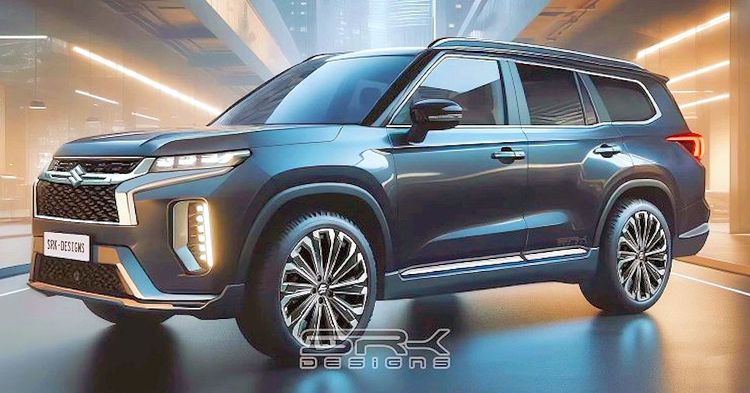
The SUV is expected to share the same features, design language, and engine options as the standard Grand Vitara and Hyryder, but with the addition of a third-row seating arrangement. It is likely to be offered with both 1.5-litre mild-hybrid and strong-hybrid petrol engines.