High Court To Govt: No Forced Spot Traffic Fines, No Seizing Vehicles


The Telangana High Court has put strict limits on how traffic fines can be collected on the road, effectively shutting down the “pay right now” pressure routine that many motorists in Hyderabad have faced. In an order passed on January 20, Justice N V Shravan Kumar made it clear that traffic police can issue challans, but they cannot coerce motorists into paying on the spot. Any roadside payment, the court said, must be completely voluntary.

The ruling came while hearing two writ petitions filed by V Raghavendra Chary, a Secunderabad resident, who alleged that Hyderabad traffic police were using high-handed methods to recover pending fines. The court agreed that enforcement cannot turn into forced recovery.
If a motorist refuses to pay immediately, police cannot threaten to seize keys, obstruct movement, block the vehicle, or create a situation where paying becomes the only way to get on with your day.
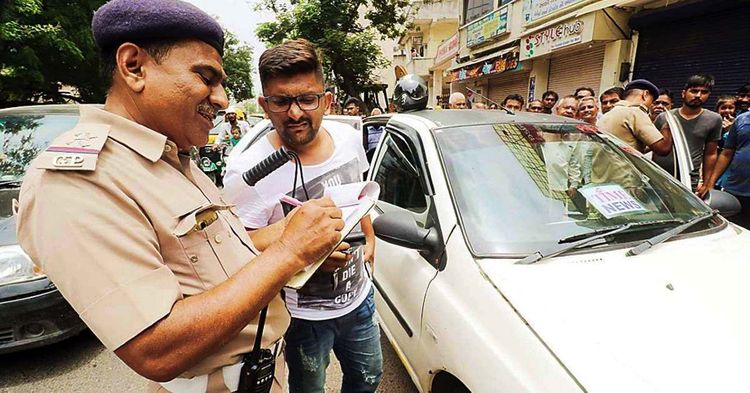
For motorists, the practical relief is simple. If you are stopped and a challan is issued, you are allowed to pay later through the official system. The police cannot treat the road as a collection counter. This also restores an important right: if you believe a challan is wrong, unclear, or unfair, you are not forced into paying first and questioning later.
The court also clarified that routine checks remain valid. Police can still stop vehicles for licence and document verification, helmet and seatbelt compliance, insurance checks, and similar enforcement duties. What they cannot do is convert that stop into a forced payment situation.

The court’s message to the government is that unpaid challans must move through proper legal procedure. If a fine remains unpaid, the state has to proceed the lawful way, by issuing notices and taking the matter before the appropriate magistrate for prosecution. The police cannot act as ad hoc compounding authorities and recovery agents on the roadside.
This is a meaningful shift because spot collection is easy and fast. Due process is slower and more effort-heavy. The court’s point, however, is that inconvenience cannot be used as leverage to extract money. Penalties must flow through legal channels, not pressure tactics.
A key argument in the case was that under the Motor Vehicles Act, compounding and penalty decisions cannot be left to field-level discretion.
The petitioner also questioned the validity of GO No. 108 (2011), which is cited to justify police collecting compound fines, on the ground that it was not published in the official gazette as required. The court noted this as a serious issue, since lack of proper notification can weaken the legal basis for such enforcement.
The court also addressed the quality of challans themselves. It pointed out that challans must clearly mention which legal provision was violated, so citizens understand the charge and the prescribed fine. It directed upgrades to the e-challan system to ensure every challan carries that clarity.
The order comes close to public discussion around stronger fine recovery ideas, including suggestions that fines be automatically debited from bank accounts. The High Court’s stance signals that recovery methods cannot bypass legal safeguards.
The matter is listed again on February 3, when the state government is expected to file its response. Until then, the message is direct: issue challans, follow the law, and stop coercive roadside recovery.