No PUC, No Fuel Rule To Become Permanent in Delhi


Delhi Chief Minister Rekha Gupta has confirmed that the No PUC, No Fuel rule will be enforced on a permanent basis across petrol pumps and gas outlets in the city. Vehicles without a valid Pollution Under Control certificate will be refused fuel.
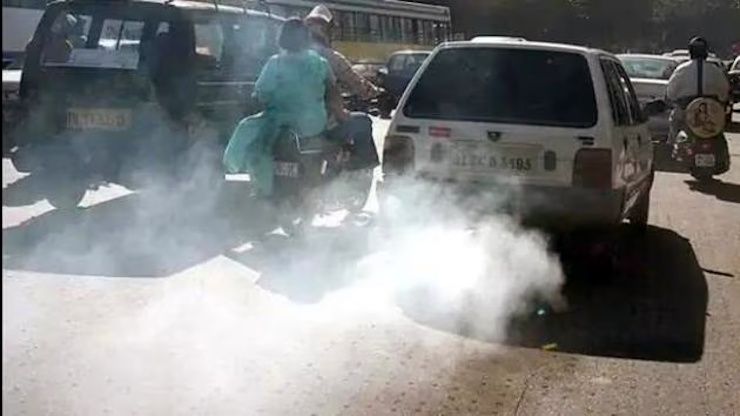
What started as an emergency-style anti-pollution step has now moved into standing enforcement, and that changes how vehicle owners need to think about the certificate. It is no longer a document many people can ignore until winter panic sets in. It now directly affects whether you can refill the vehicle at all.
The city is making it clear that the fuel ban is not meant to be symbolic. The transport department, food and supplies department, MCD and Delhi Traffic Police have all been told to enforce it. That matters because older anti-pollution rules often failed not because the paperwork did not exist, but because ground-level enforcement faded after the headline moment passed.

The first thing to understand is that getting a PUC is still one of the cheapest compliance tasks in motoring. Delhi’s official fee schedule puts petrol, CNG and LPG two- and three-wheelers at Rs 60, petrol, CNG and LPG four-wheelers and above at Rs 80, and diesel vehicles at Rs 100, plus GST where applicable. That means the cost of skipping it is not financial difficulty. It is mostly neglect.
The official validity rule is also stricter and simpler than many people assume. In Delhi, the certificate is valid for 12 months for Bharat Stage IV and Bharat Stage VI compliant vehicles, and only three months for other vehicles. That is different from the casual public assumption that every car gets six months by default. For owners of older vehicles, that shorter validity matters because it brings them back into the testing cycle more often.
The penalty for getting caught without a valid PUC is far more serious than the testing fee. The existing fine remains Rs 10,000. That means a driver trying to save Rs 80 or Rs 100 can end up exposed to a penalty 100 times higher, and now also faces the added problem of being refused fuel.
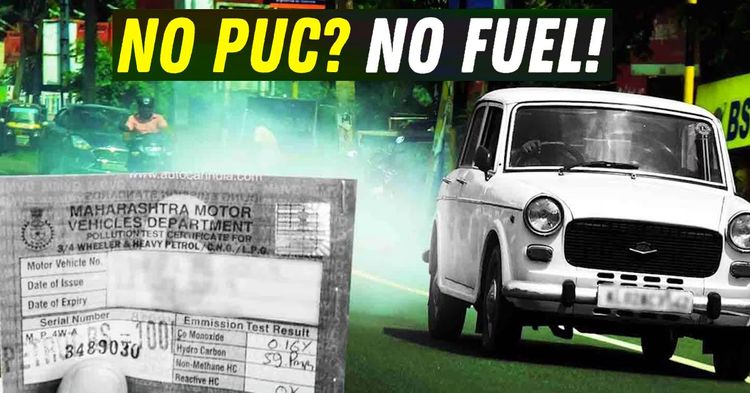
What makes the rule more serious now is that Delhi has tied it to the everyday act of refuelling. During the December 2025 enforcement drive, the city’s PUC system saw an immediate compliance surge.
More than 100,000 certificates were generated over just three days from December 17 to 19. On December 19 alone, 47,600 certificates were issued. A day earlier, 45,479 certificates had already been issued, around 46 percent higher than the previous day.
Those numbers show two things. First, a very large number of owners were clearly running without current paperwork until fuel access was threatened. Second, the policy works fastest when it hits a daily-use choke point rather than relying only on roadside challans.
Delhi also has the physical network to make the rule workable on paper. The city has 966 authorised PUC centres. That means access is not the basic bottleneck. The bigger issue is whether the system can handle sudden demand spikes smoothly when enforcement tightens.
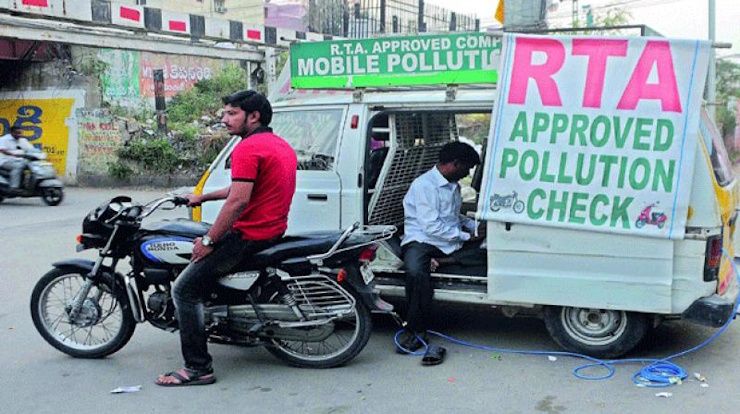
That is where the story gets less tidy. The city’s crackdown has not been limited to vehicle owners. It has also gone after irregularities at testing centres. During the post-December drive, 28 PUC centres were suspended and some centres faced further punitive action over fake or improper certification practices.
A vehicle that fails a test is not automatically seized on the spot. It must be repaired and retested before the certificate can be issued. Common reasons for failure include poor servicing, a degraded catalytic converter, a choked air filter or generally weak engine condition. In practical terms, that means the rule will hit neglected vehicles hardest, which is exactly what the government wants.