

Mahindra’s electric SUVs- BE6 and the more premium XEV 9e, have been around for over a year. People love them for their tech-laden nature. Their advanced park assist features continue to fascinate many. An influencer recently took to social media complaining that the Park Assist on his XEV 9e isn’t functioning properly. He also shared a video showing the electric SUV not responding to key-fob-based park assist commands. So, should you really blame the EV here? No! This car is working as designed.
This video surfaced on the YouTube channel Arun Smoki, which publishes content related to cars and motorcycles. As the video opens, we see the YouTuber coming out of a restaurant. His car, an XEV 9e finished in the Desert Mist colour, is parked nearby.
As he walks closer, we see some amount of water-logging in the parking area. Water can be seen to the right of the vehicle and beneath it. The YouTuber then takes out the key fob and tries to use the key fob-based park out function to reverse the vehicle so that he can get inside without getting his shoes dirty. However, the XEV does not respond. He then concludes that something is wrong with the SUV's Park Assist system.
These complaints about a supposed malfunction appear baseless. The influencer has also shared two follow-up videos in which he is seen trying to replicate the 'error' again. Below is one of them.
In both cases, the vehicle moves without any trouble. These were filmed after the controversial first incident. Since the 'issue' could not be replicated, the original incident seems to be a one-off.
Now, let’s analyse the controversial incident in detail. As the YouTuber himself confirms on video, he tried to maintain a near-identical setup for the follow-up videos, as the original incident.
He was as close to the vehicle while initiating the action as he was in the first case, and pressed the right keys the right way. What he failed to notice is that the follow-up videos' settings lacked the water body! This is where the actual reason for the alleged malfunction lies.

The Auto Park Assist feature works by using inputs from 12 ultrasonic sensors and four camera units. These feed the system with information about the vehicle's surroundings. The system then uses this data to decide whether to proceed.
Ultrasonic sensors emit high-frequency sound waves (approximately 40 kHz). These travel in straight lines and bounce back after hitting any obstacle nearby. The system captures the same and measures the ‘time of flight’ to calculate the accurate distance to the obstacle. A compilation of these data is used to map the surroundings for Auto Park features. In addition to these, the XEV uses visual feed from the 360-degree camera units as well.
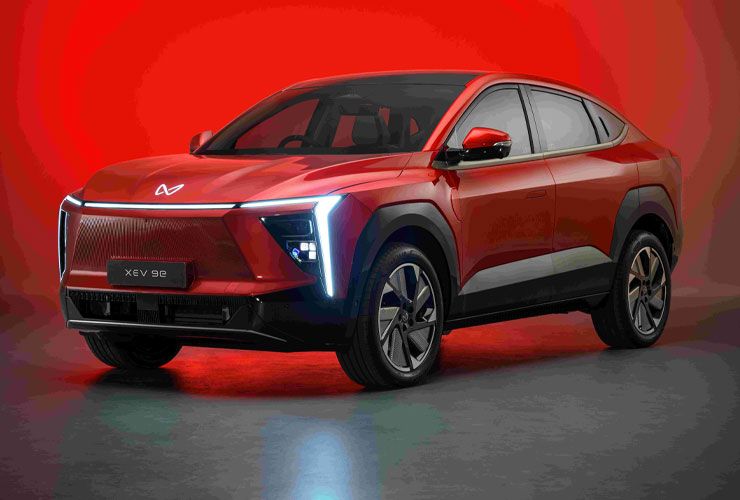
In this case, the place where the XEV was parked had water-logging. When Ultrasonic waves hit water, most of them get absorbed by the water. Some quantity is also deflected. A relatively small amount is reflected back. This can confuse the system and won’t suffice for effective processing.
In the XEV 9e’s owner’s manual, Mahindra clearly mentions several possible scenarios that may affect the effectiveness of the Park Assist system or make it vulnerable. It states that the detection of the Auto Park Assistance System will be compromised on muddy, sandy and water-filled roads.
It also says that soft, porous materials like foam, rubber liquid, etc, which can absorb or deflect sound waves, will lead to poor detection by the system. In a later section that speaks about the limitations of automatic parking slot detection, it mentions that a ‘Parking space filled with water, mud, garbage, leaves, snow & ice’ will degrade the system’s performance.
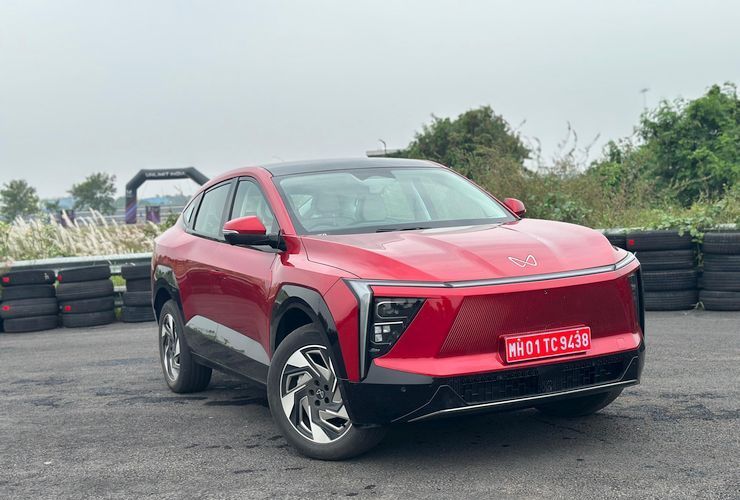
Taking all these into account, the XEV 9e, in this case, seems to be working as designed! It did not respond to the key fob’s commands, likely because water body absorbed some of the sound waves, and even got some bent, resulting in poor data collection. This may have prevented the system from initiating the remote park assist feature. In the follow-up videos, since there was no deflection of sound waves, the system functioned smoothly.
On December 10th, this YouTube channel posted another video showing the vehicle in the same location shown in the controversial video. This time there is no waterlogging in the area, as the area has been filled with sand. He tries to use the key fob-based parking feature. The feature works perfectly this time. This proves the findings that we have shared in this article.