Standing Through Your Car's Sunroof Is Not Just Stupid, It’s Now A Criminal Offence


A viral video of a youth standing through the sunroof of a moving Mahindra Scorpio on the Dwarka Expressway has once again ignited the debate on road safety and the misuse of vehicle features.

Gurugram Police have registered an FIR against the unidentified youth and the driver, charging them under serious sections of the Bharatiya Nyaya Sanhita (BNS) for rash driving and endangering public safety.
This incident is not an isolated case but part of a disturbing trend where the sunroof - a feature designed for cabin ventilation and light - is being treated as a stage for social media stunts.

The police have booked the accused under sections 281 (rash driving), 285 (danger or obstruction in public way), and 125 (act endangering life) of the BNS. This move signals a zero-tolerance approach.
While many assume that popping out of a sunroof is a harmless thrill, the law views it differently. Standing inside a moving car interferes with vehicle control and distracts other road users.
Under the Motor Vehicles Act, Section 184 (dangerous driving) and Section 177 can also be invoked, attracting heavy fines and potential imprisonment. The message is clear: the road is not a film set.

The dangers are not theoretical. In September 2025, a young boy in Bengaluru suffered head injuries when he hit an overhead height barrier while standing out of a sunroof on GKVK Road. The driver failed to notice the barrier, and the child, exposed and unprotected, took the impact.
The risks go beyond overhead obstacles. In the event of sudden braking, a person standing through a sunroof acts like a loose projectile. Without a seatbelt, they can be thrown out of the vehicle or slam against the sharp metal edges of the roof, causing severe spinal or chest injuries. Even a minor collision that would be harmless to a belted passenger can turn fatal for someone standing up.
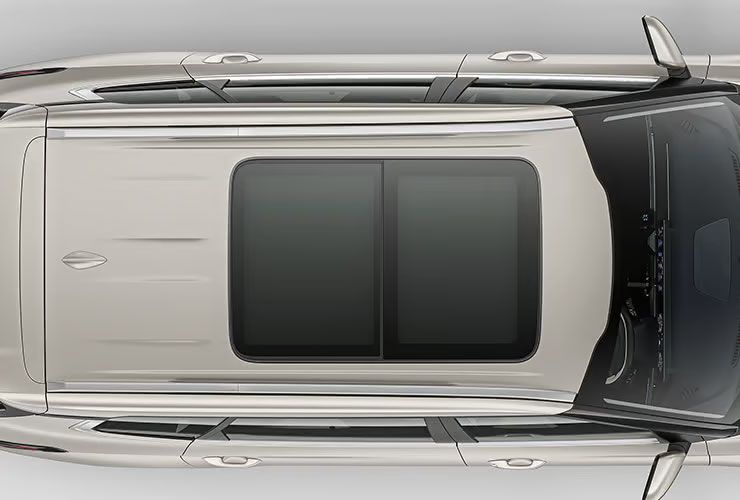
Manufacturers market sunroofs as a premium feature for "panoramic views," but no user manual endorses standing through them. It is a ventilation device, period.
Yet, on Indian roads, it has become a status symbol to flaunt, often with children being the victims of their parents' ignorance. The Gurugram FIR is a grim reminder that your car’s "cool factor" is not worth a criminal record or a life.
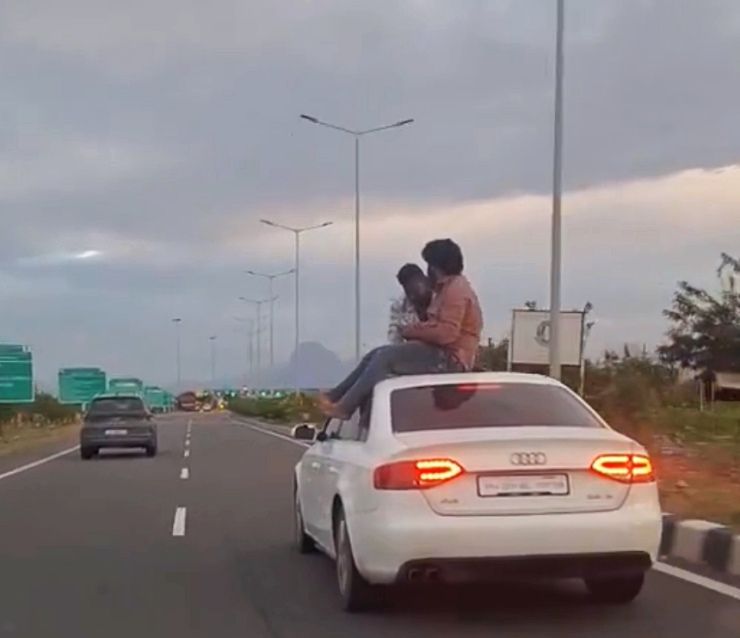
Recent history is littered with tragedies that prove how deadly this habit can be. In Kolkata, a 10-year-old girl’s throat was slit by a kite string (manjha) while she was standing through the sunroof of her car on the Maa Flyover. She survived but only after a battle in the ICU.
Similarly, in Ludhiana and Delhi, incidents involving kite strings have proved fatal for children exposed through sunroofs, as the sharp thread can wrap around the neck in a split second, acting like a blade.
In Nagpur, a seven-year-old boy suffered severe neck and eye injuries from nylon manja while enjoying a sunroof ride. These cases highlight a unique Indian hazard: the "invisible killer" of kite strings, which pose zero threat to passengers inside a closed cabin but are lethal to anyone popping out.
The Bengaluru incident in 2025, where the child hit an overhead rail, further underscores that drivers often misjudge vertical clearance. A car fits under a barrier; a car with a human torso sticking out does not. These accidents aren't "freak events"—they are the predictable result of using a ventilation vent as a viewing deck.