Sunfilm vs Factory Tinted Windows: Cop Explains What's Legal, And What's Not


One of the most debated topics when it comes to cars in India is tint on windows. Many people believe that if they install 70 Visible Light Transmission (VLT) films on their cars, they can get away with getting caught by police authorities during regular checks. Today, however, a traffic police officer from Karnataka Traffic Police has explained what is legal and what is illegal in terms of the tints on the windows and windshields of cars in India.
The video in which the traffic police explains in detail about the legality of window films and tints has been shared on Instagram by Major Storys on their page. In this video, a Karnataka Traffic Police officer explains that there is a lot of controversy when it comes to black and sun films on the windows of cars. Many people believe that they can install films which have a specific percent of visibility.

However, he then breaks this myth and highlights that according to the Central Motor Vehicles Rules, 1989, more specifically Rule 100(2), there is a regulation on car window tinting based on Visible Light Transmission (VLT). After the 2012 Supreme Court ruling, no vehicle is allowed to have a black film or any material on car windows.
It has been highlighted that even if there is one percent film on the windows of a vehicle, it is completely illegal. He adds that only tinted glasses from factories are allowed, and that too should meet minimum VLT limits. These limits for the front and rear windshields are 70 percent light transmission, and for side windows it is 50 percent.

Moving ahead in the video, he elaborates on the difference between tinted glasses and glasses with aftermarket sun or black films. He shows the front driver-side glass of a Maruti Suzuki Dzire parked, which has been given black film. He highlights that the edge of the window reveals if it has been pasted with an aftermarket film.
He concludes the video by mentioning that in India any percent of black film or sun film is illegal. However, if the vehicle is fitted with factory-tinted glass with 70 percent front and rear windshield light transmission and 50 percent light transmission on the sides, then it is legal.
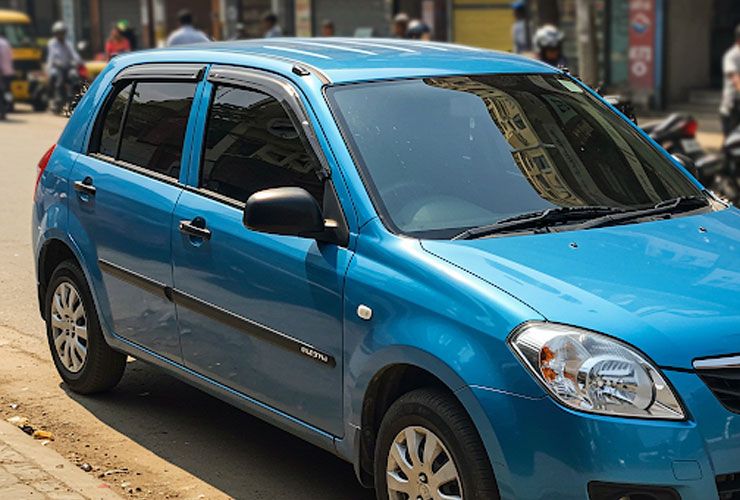
Generally, the fine for the first-time offence of having illegal window films installed in the vehicle is Rs 100, and for repeat violations it is Rs 300. However, during traffic police checks in a lot of states, the fines imposed can exceed these amounts. Lastly, the authorities can remove the window films on the spot.
You may have noticed that a lot of luxury cars such as Audi, BMW, Mercedes-Benz, and others have darker windows, and yet they don't get fined by the authorities. Well, the answer has already been given above. Most luxury cars come equipped with “privacy glass” that is manufactured with a tint inside the glass itself.
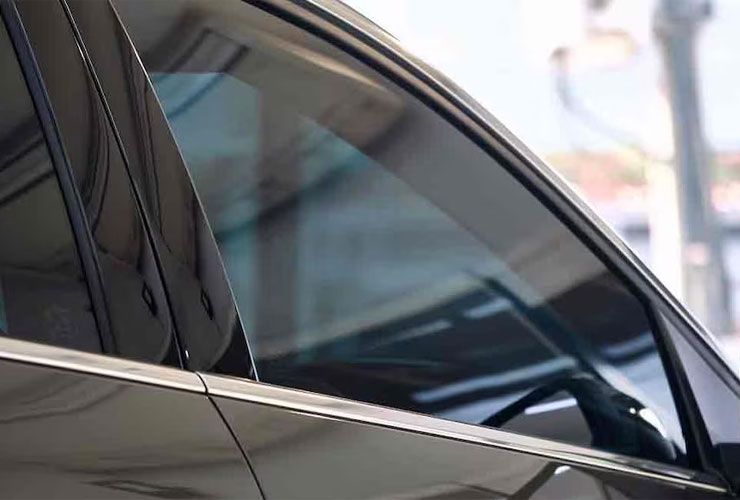
These glasses are manufactured with a tint pigment mixed during the glass manufacturing process. Apart from these, luxury car brands use advanced IR and UV absorbing layers which can block 99 percent of UV rays, 60 to 80 percent heat, and still allow legal light.