Brand New Audi Q3's Instrument Cluster Malfunctions: Court Orders Audi To Replace Luxury SUV


Buying a luxury car is a dream for many, and a lot of people end up achieving this dream. However, what happens when that dream car becomes a nightmare due to faults from the factory? Well, it becomes the talk of the town.

Recently, an Audi Q3 luxury SUV owner filed a complaint against Audi India after their SUV started suffering from multiple instrument cluster and safety problems from the next day of delivery. As a result, the owner was rewarded with a brand-new vehicle after the court ordered Audi India to replace the faulty vehicle.
As per the reports, the District Consumer Disputes Redressal Commission, Ambala, passed its order on April 20. The court directed the dealer and manufacturer to jointly replace the defective Audi Q3 40 TFSI SUV with a brand-new vehicle of the same model and specification free of cost.
Neena Sandhu, president of the commission, along with members Ruby Sharma and Vinod Kumar Sharma, headed the bench while hearing the complaint. The court also added that the companies will have to pay Rs 7,000 for mental agony and physical harassment and another Rs 5,000 towards litigation expenses.
Rajesh Batra from Ambala recently filed a complaint that he had purchased the Audi Q3 40 TFSI SUV in August 2023 from Chandigarh-based Ashwani Automobiles Ltd, which is an authorised Audi dealer. The luxury SUV was purchased at a cost of around Rs 42.35 lakh.
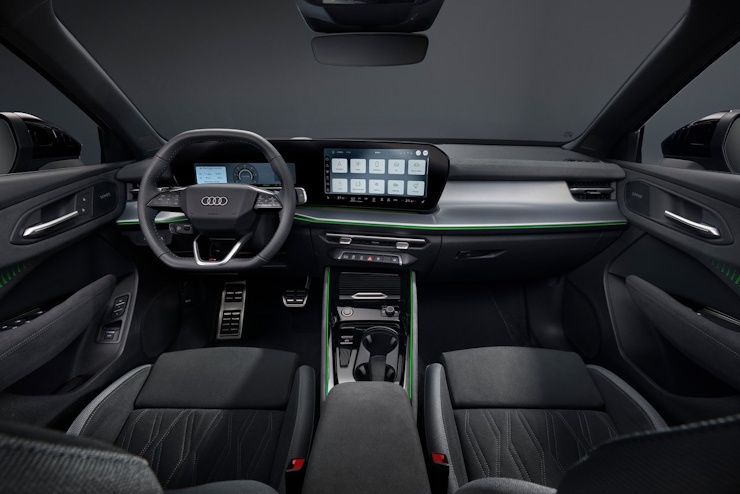
However, as per the complaint, the owner started noticing major problems in the SUV from the very next day after taking delivery. The issue was reportedly related to the vehicle’s instrument cluster and safety systems. It was highlighted that the Audi Q3 displayed a “Safety System Fault” warning message on the instrument cluster.
Along with this, the hazard warning lights and airbag malfunction indicator continuously remained illuminated. Now, since these warnings were directly linked to the safety systems of the vehicle, the owner became extremely concerned about the reliability and safety of the SUV. The owner added that these warnings also created fear and shock because they compromised essential safety features like the airbags.
After noticing the issue, the owner then informed the dealer and was asked to bring the SUV for inspection, following which the vehicle was taken to the workshop multiple times. However, after repeated diagnostic scans and temporary software resets, the issue continued to come back.
After this, during the detailed inspection, it was noted that important components of the vehicle were defective. These included the passenger airbag sensor and wiring cluster connected to the airbag control module, and both of these parts required replacement.
The owner, in his complaint, also mentioned that during the repairs, the vehicle was dismantled, which included the removal of internal cabin components. However, even after the replacement of parts and repairs, the owner claimed that he continued to experience issues and was under constant fear regarding the vehicle’s safety and reliability.

Following this, Audi India raised preliminary objections and argued that there were no issues in the service on its part. Audi India also stated that it only supplies vehicles to authorised dealers on a principal-to-principal basis, and the retail transaction was between the dealer and customer.
Apart from this, Audi India also stated that the complainant failed to provide expert evidence to prove the alleged manufacturing defect. However, the court noted that the authorised dealer and its owner failed to appear before the commission despite being served notices, and since the proceedings against them were held ex parte, the commission stated that this showed that there was no defence from their side.
Following this, the commission also noted that although the vehicle was under warranty, a customer who is spending over Rs 42 lakh on a luxury SUV cannot reasonably be expected to face major safety-related defects soon after the purchase. The court also added that the concern raised by the complainant regarding safety was genuine and could not be ignored.
Apart from these, the bench highlighted that the job cards submitted during the proceedings themselves sufficiently proved that the vehicle suffered from serious defects related to the safety system. The commission specifically stated that the replacement of critical components linked to the airbag system strengthened the complainant’s case. The court concluded by stating that the dealer had failed to properly rectify the defects despite repeated attempts.