Bengaluru Traffic Police Books Over 12,000 Wrong-Side Driving Cases In Just 4 Days


Bengaluru Traffic Police conducted an intensive special drive from January 21 to 24, booking 12,207 cases of one-way driving violations across the city. The crackdown, which was triggered by social media videos and repeated complaints from commuters, reflects the force's push to restore traffic discipline on roads where wrong-way driving has become increasingly common.
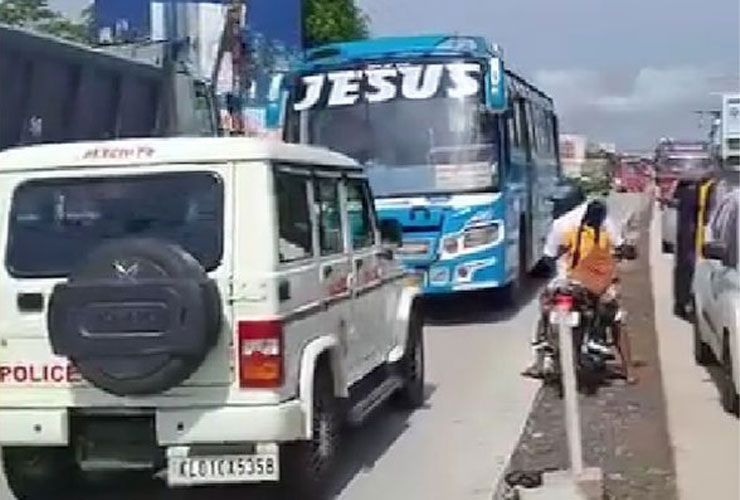
In the initial two-day phase on January 21 and 22, the police booked 5,458 cases alone. The south zone accounted for 1,900 violations and the north zone recorded 1,033 cases. By the fourth day, the tally had more than doubled, with the east division recording over 3,100 violations, making it the top-performing zone. The four-day drive represents one of the most aggressive enforcement operations against one-way violations in the city's recent history.

The special drive was not random. Bengaluru is ranked the world's second most congested city, and wrong-way driving adds to the chaos. Social media videos showing vehicles driving against traffic on one-way roads, and data from ASTraM (Automated System for Traffic Rule Enforcement Monitoring) showing an uptick in violations, prompted police action. Commuters have repeatedly complained that such infractions disrupt traffic flow and create serious accident risks, especially during peak hours.
DCP (Traffic, South) Gopal M Byakod addressed the underlying behavioural problem. "Once one person drives wrong, others follow. This herd mentality must change. When you see someone break the law, they must be reprimanded, not followed," he said. The police issued challans on the spot to violators and warned repeat offenders of stricter penalties as per traffic regulations.
The drive is not ending yet. DCP (Traffic, North) Jayaprakash announced that similar operations will continue until January 31, 2026. The police plan to expand the enforcement to other violations, including helmetless riders, improper parking, and traffic signal jumping. Towing of wrongly parked vehicles will also resume once final administrative approvals are obtained.
On the same day as the final phase of the one-way crackdown, Bengaluru Traffic Police conducted a separate early-morning enforcement drive targeting drunk school bus drivers. Between 7 am and 10 am on January 23, the police screened 5,110 school vehicle drivers across the city for alcohol consumption. The operation was city-wide and covered all traffic police station limits.
Of the 5,110 drivers screened, 26 were found to be driving under the influence of alcohol and were immediately booked under the Indian Motor Vehicles Act. Cases were registered on the spot, and recommendations have been sent to the Regional Transport Offices for license cancellation and suspension. The police did not announce any administrative penalties or suspension of operations for the transport services involved.
DCP Byakod emphasized the gravity of the situation despite the small numbers. "Even though this may seem a small number, these drivers are responsible for transporting hundreds of children. Each bus carries 20-30 children; it is a major risk," he said. Each of the 26 drivers booked was potentially a safety hazard to between 20 and 30 students during their daily commute, making the 0.5 percent violation rate significant in absolute terms.
The operation was part of the police's January 2026 road safety awareness month campaign. Four wrecked vehicles have also been placed at key junctions including Indiranagar, Jayanagar, Brigade Road, and Hebbal flyover to serve as visual reminders of accident consequences. The police post the history of each vehicle and the victims involved on their social media handles.
The Bengaluru Traffic Police have made it clear that surprise checks on school vehicles will continue. The zero-tolerance policy on drunk driving in school transport is permanent, not a one-time crackdown. The force is also coordinating with companies along the Outer Ring Road to develop congestion-easing strategies beyond enforcement alone.
Both the one-way and school bus operations signal a shift toward stricter accountability. Whether this sustained enforcement reduces violations or merely shifts behaviour temporarily will become clear as the drives continue through the month.