No Number Plate, No Licence, No Helmet Rule: Bengaluru Wants To Change That For Delivery E-Bikes


Under the current Motor Vehicles Act, any electric two-wheeler with a motor rated below 250 watts and a top speed under 25 km/h is completely exempt from registration, driving licence requirements, and helmet enforcement. These are the low-speed electric bikes used heavily by delivery workers across cities, particularly in Bengaluru. No number plate is required. No RTO paperwork. A teenager aged 16 can legally ride one without any formal documentation. For riders and aggregators, this has made these vehicles extremely attractive for last-mile delivery on cost and compliance grounds.

Bengaluru City Police Commissioner Seemant Kumar Singh has now flagged this exemption as a serious enforcement gap and indicated that the department is actively exploring bringing these vehicles under the Motor Vehicles Act. The move is being driven by a specific and documented problem: delivery riders on these unregistered, untracked bikes are generating a disproportionate number of traffic violations.
The numbers from Bengaluru Traffic Police are not ambiguous. Between 2023 and 2025, delivery riders racked up 1,46,839 traffic violation cases across the city. The year-on-year trend is sharply upward: 30,968 cases in 2023, 52,153 in 2024, and 63,718 in 2025 up to November alone. The eastern division covering Whitefield, KR Puram, Indiranagar, and Halasuru accounted for 73,971 of those cases over the three year period, with Whitefield subdivision alone contributing over 25,000 violations.
The violations include wrong-side riding, footpath riding, riding against one-way traffic, signal jumping, and illegal parking. Because low-speed e-bikes carry no registration plates, police cannot issue challans or trace riders after a violation. The vehicle effectively disappears into traffic with no consequence.
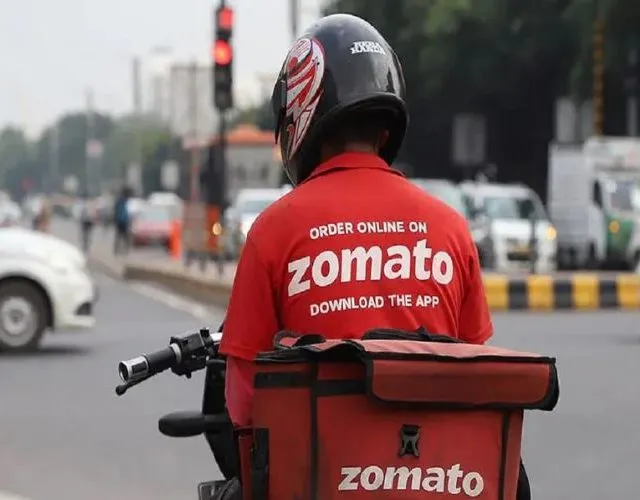
A separate crackdown in late 2024 saw police file nearly 6,000 cases against e-commerce delivery personnel in a single day across the city, collecting Rs 30.57 lakh in fines. The most common offences included pillion riders without helmets, no-parking violations, no-entry zone riding, and footpath riding. For infractions like helmet non-compliance and document checks, however, the police acknowledged they could not act because these vehicles legally fall outside the Motor Vehicles Act.
If these bikes are brought under the Motor Vehicles Act, it would trigger several cascading requirements. Vehicles would need to be registered with the RTO and carry number plates, making them traceable and challan-able. Riders would require a valid driving licence. Helmet enforcement would become applicable. Aggregators would need to ensure their fleets comply before deployment.

For platforms like Swiggy, Zomato, Zepto, and Blinkit, which collectively employ over one crore gig workers nationwide, this is a significant operational consideration. Many delivery fleets specifically use sub-250W bikes precisely because they avoid registration and compliance costs. Mandatory registration and licensing would add both upfront costs and administrative burden.
The Police Commissioner has also called for companies themselves to be held accountable for their riders' conduct on the road. The argument is straightforward: delivery timelines set by these platforms are a direct driver of rider behaviour, and a company that imposes a 10-minute delivery guarantee bears some responsibility for the consequences of that pressure.
Bengaluru police have also flagged 75 high-risk junctions for redesign to improve pedestrian safety, a recognition that the enforcement problem is only one part of the equation.